When a test comes back high during a sale
Radon most often surfaces at the worst moment, in the middle of a real estate deal. It is usually tested during the inspection contingency, and a reading at or above the EPA action level of 4.0 pCi/L starts a short clock. The good news is that the fix is fast: many Wisconsin homes are mitigated in a single day. The bottleneck is finding a professional in time, and that is exactly what we compress. See radon mitigation at a home sale for how timing and negotiation usually work, and if you are the buyer holding the inspection report, start with what happens after a failed radon test during a home inspection. Agents and inspectors who handle this weekly have their own page.
Why radon matters in Wisconsin
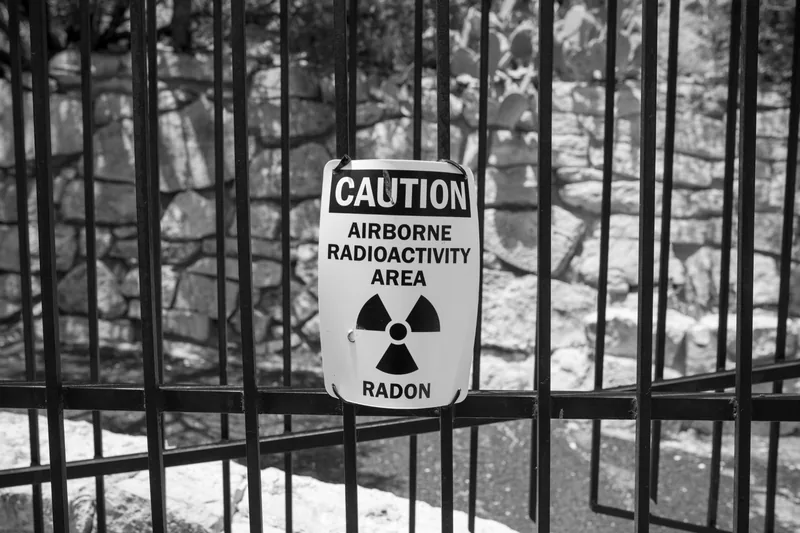
Radon is a naturally occurring radioactive gas that seeps up from the soil, and it is the leading cause of lung cancer among people who do not smoke, according to the EPA and the U.S. Surgeon General. Wisconsin sits on radon-prone ground: 28 of the 72 counties in Wisconsin are EPA Radon Zone 1, and about one in 10 homes tests above the action level, per Wisconsin DHS. You cannot see or smell it, so the only way to know your home is to test.
Radon zones across the areas we cover
We anchor in Madison and Dane County and cover central and western Wisconsin. The table shows the EPA Radon Zone for each area. Every Wisconsin county is Zone 1 or Zone 2, so testing is worthwhile everywhere in the state.
| Area (anchor city) | County | Region | EPA Radon Zone |
|---|---|---|---|
| Madison | Dane | south-central Wisconsin | Zone 1 |
| Dane County | Dane | south-central Wisconsin | Zone 1 |
| Eau Claire | Eau Claire | west-central Wisconsin | Zone 2 |
| La Crosse | La Crosse | the western Wisconsin Coulee Region | Zone 2 |
| Wausau | Marathon | north-central Wisconsin | Zone 1 |
| Stevens Point | Portage | central Wisconsin | Zone 1 |
| Janesville | Rock | south-central Wisconsin | Zone 1 |
| Fond du Lac | Fond du Lac | east-central Wisconsin | Zone 1 |
| Appleton | Outagamie | the Fox Valley | Zone 2 |
| Green Bay | Brown | northeastern Wisconsin | Zone 2 |
Zone 1 means the EPA predicts an average indoor level at or above 4 pCi/L; Zone 2 means 2 to 4 pCi/L. Every Wisconsin county is EPA Radon Zone 1 or Zone 2. The state has no Zone 3 county. Zone is a countywide screening designation, not a reading for any one home, so check your address on the WI DHS radon results map and test to learn your level. Sources: EPA Map of Radon Zones and Wisconsin DHS.
Radon services across Wisconsin
Whatever brought you here, the work usually falls into one of these:
- Radon mitigation: active sub-slab systems that vent radon above the roofline.
- Radon testing: short-term, long-term, and real estate tests.
- Radon mitigation at a home sale: fast help inside a tight contingency.
Homes with a crawl space or a private well have their own radon paths to close, and the Services menu covers those specialized situations too.
Honest cost ranges
Wisconsin DHS estimates a contractor-installed system typically costs $1,000 to $2,000, with the exact figure driven by foundation type, home size, and how many suction points the system needs. Publishing ranges up front is deliberate: it helps you budget before the first call. See radon mitigation for how the systems are designed and what drives the price.
Who does the work
Wisconsin does not license radon contractors, so it is an open market. The independent local professionals who do this work can hold the voluntary national credentials from the National Radon Proficiency Program (NRPP) or the National Radon Safety Board (NRSB). You review the qualifications, the quote, and the plan yourself.